
Afterwards we trailed in silence barren
slowly rich and poor, both friend and foe
on grass and stones to shores of Achoron
as from afar his ghostly ship aglow
approached to bring us into Hades back
to serve the masters of the Underworld;
the river’s water, mucus-like and black
mirrored darkly ferry, and Charon snarled
“You, corpses, pay or stay”, with fingers cold
he pried from mouths and eyes our silver-coins
enslaved and chained we gently sailed and rolled
on sullen waves together former armies joined
Into nothingness as our bodies spoil
forgotten, heroes, cowards turn to soil
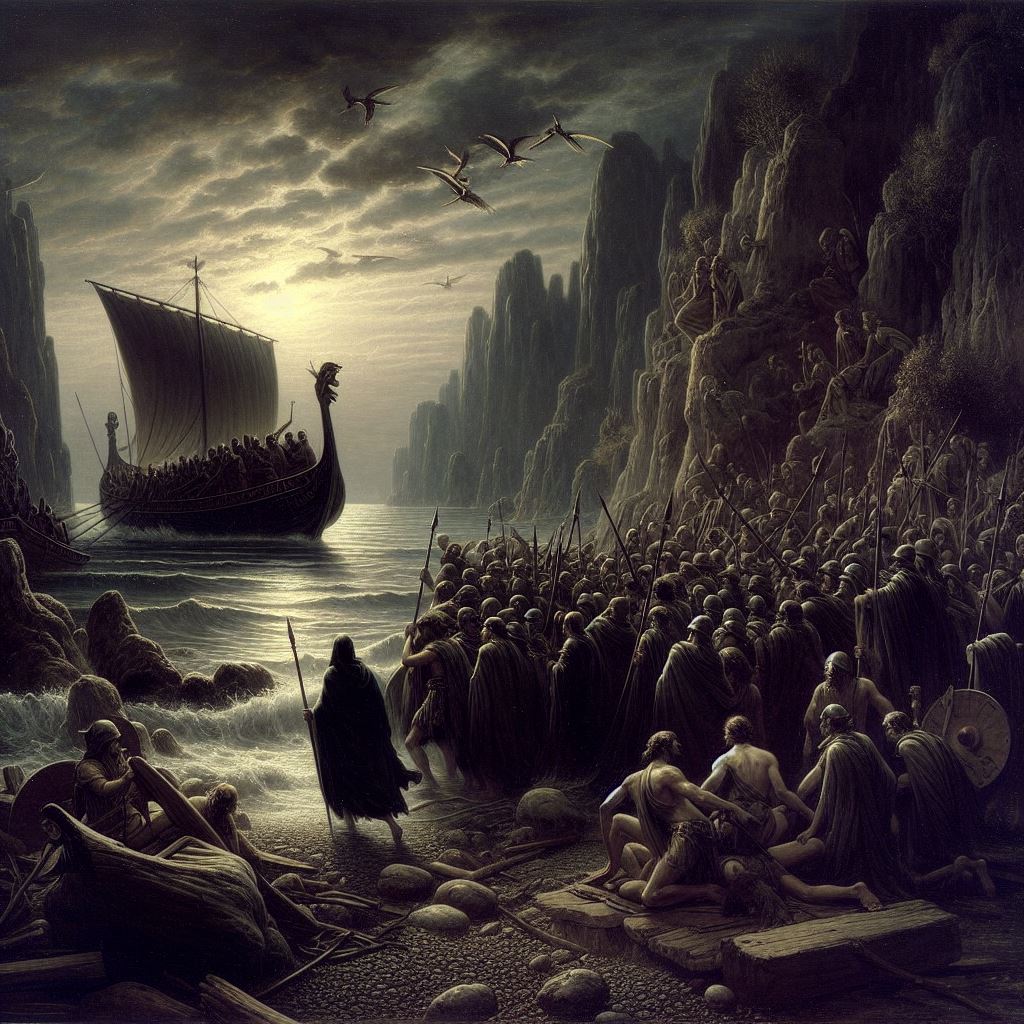
Today Merril hosts dVerse and the prompt was to write about boats and or ships of any form. My choice fell on Charon’s ship and that final crossing described so well by the myths.
February 6, 2024
 Björn Rudbergs writings
I always enjoy a mythological poem, and I love a sonnet, so this is a treat,
Björn, especially the way you describe the Styx:
‘the river’s water, mucus-like and black
mirrored darkly ferry’
and these lines:
‘he pried from mouths and eyes our silver-coins
enslaved and chained we gently sailed and rolled
on sullen waves…’
Thank you… I do not really know what pulled me to this dark place, it might be the winter weather.
Oh, this is so evocative, Björn–and visceral, that mucus-like black water. I like how they are now together forever, and it doesn’t matter that they were enemies when alive. Great sonnet!
Thank you… yes death is said to be the great equalizer.
You’re welcome. True–we all die.
Only the soft sunglow brightens this grim scenario. The final couplet incisively true. Seamless sonnet!
Thank you… had fun writing it.
Bjorn, your AI image has me looking at that myth in a different way. I imagined it was person by person who got on the ferry, but with the unending wars, of course there are masses waiting 😦
this made me shiver. like it
shivering can be a good one
My immediate thought was “bleck. That water sounds gross.”😂 and those bird things in the sky look like pterodactyls to me. Though I would love to see some, perhaps not in Hades. I really like the third stanza.
For some reason I always thought about the water being revolting…
Perfect form for telling the tale, and exceedingly perfect visual to back it up. Thanks, Bjorn!
It is a great myth to ponder.
A wonderful depiction of that boat ride into Hades and the mingling of the dead, whatever their earthly shame or glory. Each detail adds to the melancholy ride, “enslaved and chained we gently sailed and rolled
on sullen waves together former armies joined.” A rich, finely crafted sonnet, Björn. This mythological milieu suits your poetic imagination methinks.
I always found it evokative that the bleakness of Hades still is preferable to the horrors of being left behind…
As the last man on earth … I agree. Misery loves company, as they say.
A bleak, but gentle final sail. I found it interesting that the poem read as violent and harrowing, and yet they saild “gently.”
I imagine the river to be wide and slowly running… thus a very gentle ride so you may ponder what you are leaving without distraction
The spoils of war, beautifully rendered. (K)
Thank you…
The darkness inspired by Northern Winter is understandable but this myth was made by Mediterranean people – what was their excuse for such a dark passage I wonder. I like the Celtic idea of departing for Tir na N’og – sailing west into the sunset…
There were many differences from today, climate was different and I think people were more well travelled than we have thought…
Well imagined and told, Bjorn. I dreamt the other night of my brothers and I peddling prostitutes for a day in our mother’s house (while she was away), raising curious hexagon-shaped gold coins for something — waking it seemed like ferryman’s pay. (One brother is dead, the other has cancer.) Recently I’ve been on a long imaginative journey across Acheron, paying dues to old souls.
When I read your poem I could immediataly sense that some of our thoughts were similar.
Death was worse than life for the Ancient Greeks, nothing peaceful or restful about it, just grey sorrowing. That comes across well here.
I agree, and when we go to war I think some of that sense comes back… or we will see an upsurge of religion simply to cope.
And we all know where that leads.
You evoke a powerful image of foreboding. I especially like ‘we gently sailed and rolled on sullen waves’ giving emotion to the water. Thanks Bjorn.
Thank you… yes water always has its own mood
I love the darkness in your sonnet, found it captivating … I have forever been a fan of mythology.
Thank you for leaving a comment on my yacht poem. My friend sold his yacht four or five years later .. formed a theatrical production company with a friend and consistently has shows they have co-produced or produced on their own playing on Broadway (Two Tony awards!!) and London’s West End. He also sits high atop the hierarchy of NYC Metropolitan Opera. He does get around.
Thank you… and that is one kind of friend
The long night of the soul continues for the Ancient Greeks as they seek out a new singer-poet, Brudberg, to get their point across.
Oh, this is dark! A well crafted sonnet and mythology is always intriguing.
Darkly woven, I enjoyed the rhyme, but also think the message of the poem is important. It made me think of the famous line ‘Only the dead have seen the end of war”, but I think your poem shows the probable reality that something as gruesome will live on with us and get carried wherever we go after death.
I think wherever we will go, war will follow
Creepy and moving.
mythology… how well you achieved this. Thanks for sharing.
So dark, and macabre, I can see it all this sail, hear and feel it… the sea does sound revolting and not pleasant to sail upon. I did enjoy this sail into the darkness.
Wow! Your sonnet successfully kept the mood and the spirit of the painting. Lovely!