
It is solved by walking.
– Algerian Proverb
My bare feet feel the smoothness of cobblestones and I reflect how it’s been worn down by generations of soldier’s boots, young boys to be sacrificed for some forgotten glory. I had came home alive, but still the exploding shells were with me, the bloodstains of my comrades could never be washed out of my memory. The voice of our sergeant screaming just before his head blossomed in a pink explosion that looked exactly like the roses sold by young girls down by the town square.
My saxophone’s wailing memories of blooming orchards stained with blood.
Passing people look at my appearance, shudder and clear their conscience with some small coins. After earning enough for a cup of coffee and a croissant, I head to a small cafeteria with red and white chequered table-cloths.
In bitterness of coffee I can taste the tears of mourning widows.
My tears have stopped rolling a long time ago, but I’m not ready to go home yet. For the moment I just linger here, on the streets we saved, me and my companions. Were I sometimes receive a smile of gratitude laced with shame. Your smile haunts me, and in your last letter you begged me to return. But deep within I know you don’t want me any more.
Lingering on cobblestones my soles still feel the soldier’s boots resonating.
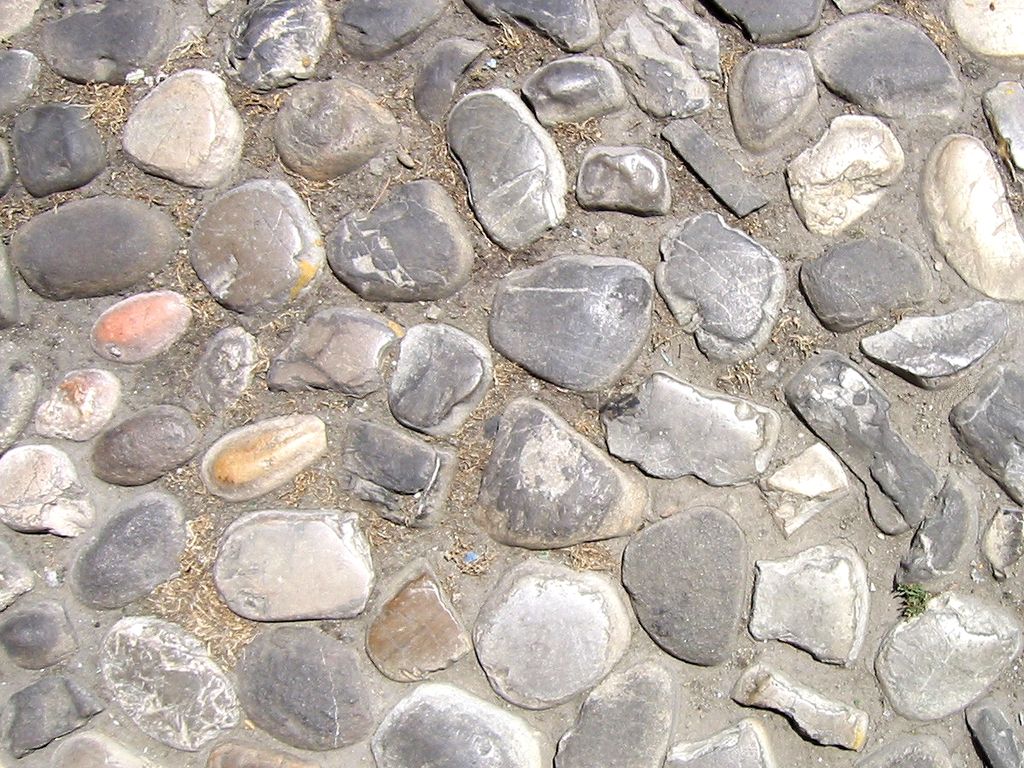
Picture from Wikimedia Commons
Ligo Haibun goes exploratory to test other forms than haiku. I got the idea of writing a haibun by using “American sentences”, Allen Ginsberg 17 syllable writing. I tried to fit the prose to a war-tired beat-generation style. The image I painted inside was an American soldier remaining in a French Village. I will link this to dVerse OLN as well.
 Björn Rudbergs writings
Bjorn this is an extraordinary piece. First of all it is unique, a world first, but you have really produced something special here. As you said before, what is in the American Sentences does not copy, it compliments. The first suddenly put me there, in gritty real, mournful life, mournful like the tone of the saxophone you brought alive. Very powerful first paragraph, but the closing lines are what makes this piece a classic – showing real psychology and perception. Very real, not at all sentimental but of course very sad. Really well done.
Thank you, and thank you for the idea to move beyond the classic.. I found Ginsburg’s haiku so extremely refreshing. Really a genre I would like to explore.
Powerful poem for a painful subject.
Thank you..
how bitter sweet the end there bjorn….full of emotion and such a hard realization as well…the sax///blooming combination is really cool…great opening line as well on the boots that wear down the cobs…and why….
Thank you.. I really used my imagination to dig deep into my fantasy..
Wonderfully descriptive and emotional… in the bitterness of coffee I can taste the tears of mourning widows… wow beautifully done and with the American Sentences it really works well. Excellent stuff!
Thank you,, 🙂 really enjoyed to write as well.
Your words just take me to those feelings…emotional and sensory…walking on the cobblestones. Beautiful poignant write.
Thank you Maggie..
Absolutely amazing!
Thank you Liz
This one really does shine, Bjorn; a terrific use of the angst of both the soldier dealing with his PTSD, there in Paris at the outside cafe, & Ginsberg with the Beat boys back home, finding new ways to express themselves; as did you, sir. I loved the emotion in this, but stumbled twice over “soldier’s booths”, googling it did not help. Did you simply mean “boots”?
Glenn thank you so much.. and yes of course it’s the soldier’s boots. 🙂
oh heck…this has something haunting to it… the walking barefoot the places he used to walk as a soldier…the memories…the deep melancholy…not being able to let go – or not yet the time to let go…a wonderful write björn
Thank you.. I have learned so much by Gay’s beat articles.. and the rest is imagination.
That is a really powerful piece. You have so well expressed his feelings… a beautiful write.
Thank you Anmol
well-told, Bjorn ~
Thank you.. … I dived into my imagination
This really pulled me in right from the start. I can’t get the image of the sergeant screaming right before his death out of my head. The way you described it was quite remarkable. Well done.
Thank you Lori, really a combination of trying to invent form and looking deep into imagination. The post-war experiences has been so well described, in snippets and photographs i have in the back of my mind.
Some startling imagery, Bjorn – with all my senses ringing, I felt I was there with you.
Thank you Colin 🙂
It is indeed an amazing piece: and the sandwiching between past and present, or thinking and seeing or whatever you would want it to be, works so well. You have hit upon a new concept in writing.
Thank you.. inventing in writing is an important way of trying my wings..
this is an amazing write to say the least… love the emotion and the imagery of the cobblestones and soldiers boots!!
Thank you.. yes the thought of why the cobblestones can be worn silky soft actually concerned me..
WOW, your imagery and description so vivid, I could feel each memory, each heart wrenching change that took place in the character as a result of his war torn experience. Poignant and stark realism. I am still feeling the pain, right down to the bare feet on the cobblestones. Great write Bjorn
Thank you for your kind words… sometimes your imagination gets very vivid.. I can assure you I was that soldier when I wrote those lines.
Björn, the imagery in the first paragraph is incredibly vivid. I am sure thousands of young men were haunted by the wars they fought, and this surely holds true today. “But deep within I know you don’t want me any more.” – I wonder how many have that feeling.
yes.. war rips apart and destroys.. still hold true..
Bjorn, the last paragraph breaks my heart. I am feeling the sadness of knowing he is not wanted any more. War does awful things to people’s minds. Your poem portrays this vividly.
Thank you.. I tried to feel and use my imagination…
This is a very clever use of the form(s), and the poem itself is deeply touching.
Thank you Misky… yes we should use the tuesdays for experiments I think…
keep on experimenting, this works well
ha.. yes the more one learns the more one wants to combine.. and combining Basho with Ginsberg sounded like a good idea.
The form really suits the subject matter. So sad.
Thank you 🙂
Awed, the experiment returned a brilliant result. The images linger in my mind like photographs.
Thank you.. 🙂
Wonderful images and an awesome write.
Thank you Ayala
Extra fine, Bjorn, in detail and layers and even in distinguishing the soldier’s voice from your own. It moved me. Is this an error: Were I sometime receive a smile … ? (Last non-italic stanza.)
A Susan.. indeed a small typo.. thank you for spotting it…
Very moving, touching, poignant. I think the form works really well with the message.
Thank you Kelly.. a form I hope to develop further.
deeply thorough and well formed writing. the phrase “but I’m not ready to go home yet” struck me as especially powerful –amongst your other beautiful images –of a soul who seems rooted in the past with imminent fear of the future.
Wow. This is really deep and evokes so many images and emotions when reading. There’s so many layers to this that reach out and grab the reader. Looking from the inside out we are the soldier who came home, never again to be the innocent that left. We are the viewer and the listener, hearing him play, seeing him on the peripherals of our daily life. Then we are him again, carrying all that baggage, and loss of those left behind. Wonderfully written piece.
Powerfully told, Bjorn – and what an imaginative combination of forms. This is certianly something you should keep experimenting with.
sometimes it is just too hard to go home
Absolutely extraordinarily breathtaking. … OH!!!!
Wow, this is gripping Bjorn…got chills. Bravo! I agree you should continue doing more of these.
“The voice of our sergeant screaming just before his head blossomed in a pink explosion that looked exactly like the roses sold by young girls down by the town square.”
THAT is poetic story telling. The whole thing was edgy and beautifully sad.
Bjorn, this is painful especially the end..the anguish of war on the heart, mind and body..well done..
I don’t know what I could add here, that has not been said already! Maybe just this- I like the way you bravely take on forms in your writing with sensitivity and clarity. And wht Margaret says: Poetic storytelling…I like that.
A painful and universal subject…your poem has power and pathos. Very fine indeed.
“in the bitterness of coffee, I can taste the bitterness of mourning widows” Wow, one of the most beautiful lines I have ever read. Astounding poem.
Sorry, I meant “in the bitterness of coffee, I can taste the tears of mourning windows”. Been a long day and my typing is not up to par.
War is a terrible thing.. you capture sadness. those cobblestone memories…. these tears.
This is just exquisite. Pain and sadness written so beautifully. I loved “Your smile haunts me, and in your last letter you begged me to return. But deep within I know you don’t want me any more.” Just wonderful!!!!!
This is amazing, Bjorn. Wow. Very moved by this style. I love the layering, the parallel dialogue. Beautiful. Mwah!
This is really lovely. A very moving piece. My tears have stopped rolling a long time ago, but I’m not ready to go home yet. These words totally made my day : “For the moment I just linger here, on the streets we saved, me and my companions”
This was raw, and emotive.
I am still getting over the pain in it.
I believe the voice is real.
You are something, Bjorn..
Yeah..sometimes it’s not easy being a hero…
Sometimes easier for a villain….
Your beautifully written American sentences stimulate our senses and direct and reinforce your powerful words. Very well done, Bjorn.
Fascinating– the idea of putting the American Sentences into haibun. We’ve studied both forms here in our local workshops, but I’d never thought of putting the two together. You certainly paint a vivid picture!
Bjorn – love to see you stretching yourself with these sentences – becoming freer in your approach. I thought this was an incredibly successful exploration of a free form that fit the subject. Well done!
Wonderful contrasts, Bjorn – well executed– great movement. k.
You really capture these feelings so well with a very unique voice.
Bjorn, you need to put a book together. really. – your writing…this piece so moving. it just flows so easily.
Pingback: Ligo Haibun Challenge – Picture Prompt Week | Thoughts while on Forest Walks·
Wonderful idea to throw in the Beat. I wasn’t aware of the American sentence before now. So much to learn still. Thanks for opening another door.
What an incredibly heart wrenching piece of writing. The idea of combining the influence of Basho with Ginsberg strikes me as brilliant. Perhaps that is the way to express the world we live in right now.
reading pieces that bridge a time like that to now has always had a haunting effect on me, how the past is caught in a story that will always keep playing. And this is so emotional, Great work!